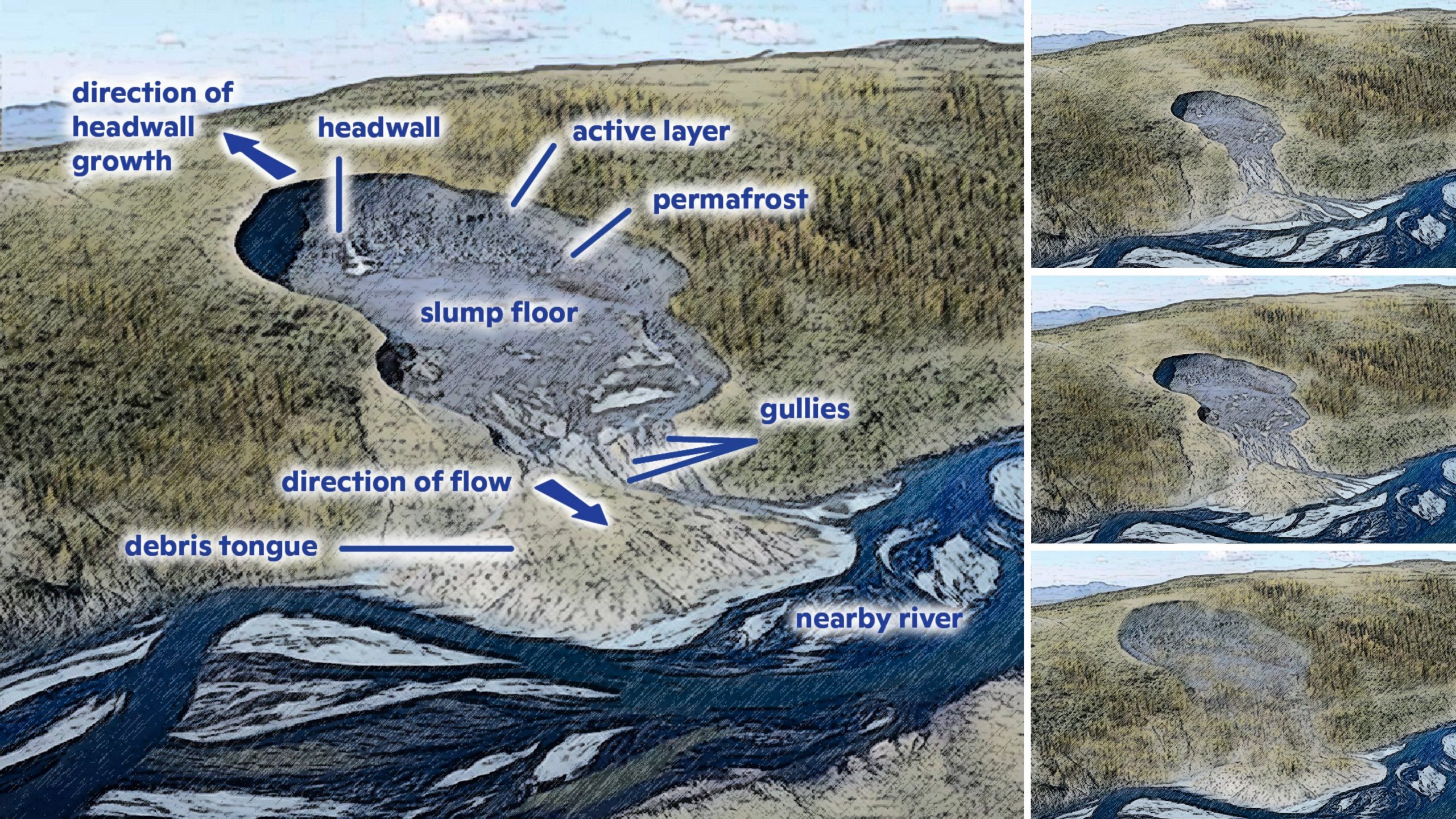
A new study published in Global Biogeochemical Cycles has traced a striking change across northern Alaska: as permafrost thaws, Arctic rivers are carrying more freshwater and more long-frozen organic carbon toward the Beaufort Sea. Led by geoscientist Michael A. Rawlins at the University of Massachusetts Amherst, the work offers one of the clearest, highest-resolution views yet of how warming is reshaping the land-to-ocean carbon pipeline in one of Earth’s fastest-changing regions.
That matters for a simple reason. Carbon that has been locked in frozen ground for thousands of years is no longer staying put. Once thawed, some of it dissolves into water, moves into streams and rivers, reaches coastal waters and can eventually be transformed into carbon dioxide. In a warming world, that creates yet another climate feedback: heat unlocks old carbon and that carbon can help trap more heat.
The new analysis focuses on Alaska’s North Slope, a broad tundra-dominated region that drains through hundreds of rivers and streams into the Arctic Ocean. It is remote, difficult to monitor and short on direct observations. Yet what happens there has consequences well beyond the far north.
The Arctic Ocean contains only about 1% of the world’s ocean volume, but Arctic rivers deliver roughly 11% of global river discharge into it. In other words, relatively small changes in land hydrology can have outsized effects on this ocean’s salinity, chemistry, ecology and carbon balance.
To understand how that system is changing, the researchers used a detailed simulation covering 44 years, from 1980 to 2023, at a fine spatial resolution of 1 kilometer. For a study spanning an area about the size of Wisconsin, that is an unusually close look. The model tracked daily river flow, thaw depth, water pathways and the movement of dissolved organic carbon, or DOC, from land toward coastal estuaries.
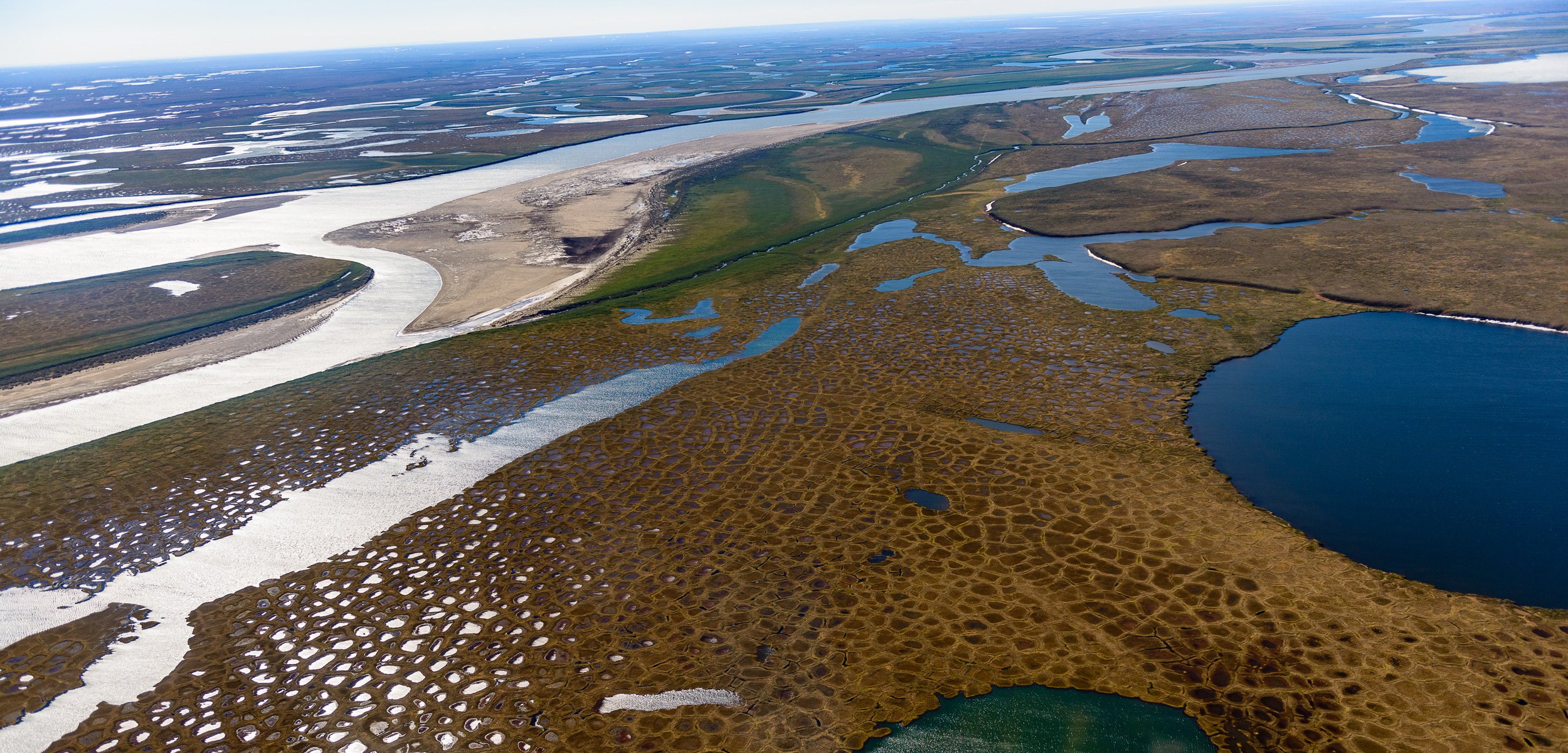
The results point in the same direction across several linked processes: runoff is increasing, the thaw season is lasting longer, groundwater-fed flow is becoming more important and more ancient carbon is being mobilized into rivers.
Why permafrost thaw changes river chemistry
Permafrost is ground that remains frozen for at least two consecutive years, though in much of the Arctic it has persisted far longer. Above it sits a surface layer that freezes in winter and thaws during the warmer months. Scientists call this the active layer.
As the Arctic warms, that active layer is deepening. The deeper the seasonal thaw goes, the more previously frozen soil becomes exposed to moving water. That changes not just how much water reaches streams, but also what the water picks up on the way.
In the North Slope, those soils store large amounts of organic material from plants and other matter that accumulated over thousands to tens of thousands of years. When frozen, that carbon is largely immobilized. When thawed, some of it can dissolve and move as DOC through soil water and groundwater into stream channels.
That shift is especially important because river transport is one of the main ways land carbon leaves Arctic landscapes. Once in aquatic systems, dissolved organic carbon does not necessarily stay dissolved or stay local. It can be consumed by microbes, broken down by sunlight, converted into greenhouse gases, or transported farther into coastal food webs.
Scientists have known for years that permafrost thaw can release carbon. What has been harder to pin down is the amount, timing and geography of that release when scaled up across a vast, sparsely monitored region. This study helps close that gap.
A model built for an Arctic blind spot
One of the central challenges in northern Alaska is that direct river sampling is limited. The landscape is large, weather conditions are harsh, access is difficult and monitoring stations are few. You can measure one river quite carefully and still miss what is happening in dozens of neighboring basins.
To work around that, Rawlins and colleagues relied on the Permafrost Water Balance Model, a system they have refined over roughly 25 years. It simulates snow accumulation and melt, soil temperature, active-layer dynamics, runoff generation, subsurface flow and other hydrological processes. More recently, the model was extended to include dissolved organic carbon.
That upgrade matters because the Arctic is not changing through one single mechanism. Snow, rainfall, soil thaw, groundwater movement, vegetation and coastal export all interact. The study’s strength lies in combining these pieces into a coherent daily picture over more than four decades.
According to the research team, the computing demand was substantial. Each model run required 10 continuous days on a supercomputer at the Massachusetts Green High Performance Computing Center. That kind of effort reflects how complex the modern Arctic has become to study: a place once treated as frozen and stable is now dynamic enough to demand high-resolution, process-based simulation.
The analysis showed that freshwater discharge to northern Alaska estuaries has increased over the study period. So too have DOC exports, particularly in late summer and early autumn. This seasonal detail is important. A changing Arctic is not just about spring snowmelt arriving earlier. It is also about thaw-driven hydrology extending later into the year.
The thaw season is stretching into fall
One of the standout findings is that the season of active thaw now reaches further into September and even October in some areas, weeks beyond what used to be typical. That longer thaw window gives water more time to percolate through deeper soil layers and gather carbon before draining to streams.
In practical terms, that means late-season river flow can increasingly reflect subsurface inputs rather than just surface runoff. And subsurface flow is exactly where old, previously frozen carbon becomes available.
This is a key distinction. Surface runoff from snowmelt can be large, but the water may travel quickly across or through shallow layers. Deeper thaw opens up new hydrological pathways, allowing water to interact with carbon-rich permafrost soils that were once cut off from the river network.
The study suggests this intensification of the hydrological cycle is being driven not only by changing precipitation and warming air temperatures, but directly by the progressive thaw of frozen ground itself. Permafrost is not merely responding to climate change; its thaw is actively altering the way the landscape routes water and carbon.
That makes permafrost loss more than a local geotechnical issue or an ecological concern. It becomes part of the global climate engine.
Not all parts of northern Alaska are changing equally
The changes are not evenly distributed across the North Slope. The researchers found some of the biggest increases in dissolved organic carbon export in the northwest.
Landscape shape appears to be a major reason. Flatter terrain tends to accumulate more organic-rich material over long periods. In such settings, thaw can expose and mobilize larger stores of carbon. By contrast, farther east, where the land becomes more mountainous and soils are often rockier and sandier, there is less organic matter available to dissolve into flowing water.
That pattern matters because it shows that permafrost thaw does not produce a single uniform Arctic response. Basin geometry, soil composition and local geology can strongly influence how much carbon ends up in rivers. For coastal managers, ecosystem researchers and climate modelers, that means regional details are essential.
It also means broad Arctic averages can hide hotspots of rapid change. A coast receiving sharply rising DOC and freshwater inputs may experience much larger ecological impacts than another stretch of shoreline only a few hundred kilometers away.
What happens when ancient carbon reaches the sea
The Beaufort Sea and its connected lagoons and estuaries are already unusual environments, shaped by seasonal ice cover, river discharge and a short but productive biological season. Extra freshwater can lower coastal salinity. Extra organic carbon can alter water color, light penetration, nutrient cycling, microbial activity and oxygen demand.
Those are not minor shifts. Estuaries sit at the intersection of land and ocean processes and many species depend on their chemical balance. Changes in salinity and organic matter can ripple through plankton communities, fish habitat and larger food webs, including birds and marine mammals.
There is also a bigger planetary concern. The Arctic Ocean already receives a disproportionately large amount of river-borne organic carbon compared with other oceans. A substantial fraction of that material is eventually processed into carbon dioxide. The source material behind the study notes that more than 275 million tons of such carbon are converted into CO2 each year. If thaw and river transport continue to increase, that flux could grow.
That does not mean every molecule of dissolved carbon entering Arctic waters immediately becomes a greenhouse gas. Some is buried, some is transformed into other compounds and some travels farther offshore. But the pathway from ancient soil carbon to atmospheric carbon dioxide is real and studies like this one help quantify its upstream supply.
A missing link in climate forecasting
Climate discussions often focus on the atmosphere, sea ice, or dramatic emissions from wildfire and industry. Less visible are the hydrological links that connect thawing land to coastal oceans. Yet those links may decide how much old carbon actually enters active circulation.
This is why the study is significant beyond Alaska. Earth system models need realistic estimates of when and where freshwater and carbon leave permafrost landscapes. Without those estimates, projections of future Arctic ocean chemistry, coastal ecosystem change and carbon-climate feedbacks remain incomplete.
The new work also highlights how urgently the Arctic needs denser observations. Modeling is indispensable, especially where measurements are sparse, but field data remain the standard against which models must be tested and improved. River chemistry samples, continuous flow measurements, soil carbon surveys, groundwater monitoring and estuary observations all help sharpen the picture.
The research team notes that the new freshwater and DOC estimates should be useful to projects examining coastal lagoon ecosystems in northern Alaska. That is a practical benefit of high-resolution modeling: it can guide where to sample, when to sample and which estuaries may be seeing the fastest change.
Another next step is understanding the role of ice wedge polygons, the distinctive geometric ground patterns common across Arctic lowlands. These features influence drainage and thaw behavior and they may help determine how water and carbon move from inland tundra to coastal channels. In a landscape where a subtle shift in drainage can redirect biogeochemical pathways, small-scale surface structure may matter a great deal.
The Arctic’s old carbon is becoming newly mobile
There is something especially unsettling about the carbon highlighted in this study: much of it is ancient. It was stored away under frozen conditions that lasted through long stretches of natural climate history. Now, over the span of a human lifetime, that storage system is weakening.
The North Slope is not collapsing all at once and the process is not simple. Some places are thawing faster than others. Some carbon will stay in soils or sediments. Some rivers will respond differently depending on rainfall, snowpack, or local terrain. But the overall direction is increasingly clear. Warming is deepening seasonal thaw, deepening thaw is changing water flow and changing water flow is flushing more old carbon toward the sea.
That is the quiet force of the study. It does not rely on a single dramatic event, but on a long, detailed record showing a system tipping further out of its previous state. The Arctic hydrological cycle is intensifying and with it, the movement of legacy carbon once thought safely frozen underground.
For climate science, that means one more feedback is sharpening into view. For northern ecosystems, it means a future with different freshwater timing, different carbon chemistry and potentially different food-web dynamics. And for everyone else, it is another reminder that climate change does not only warm the air. It rewires the hidden plumbing of the planet.
The study was supported by the U.S. National Science Foundation and NASA and its findings add fresh urgency to a question scientists have been trying to answer for years: when the Arctic thaws, where does all that carbon go? The answer, increasingly, is into the water first.