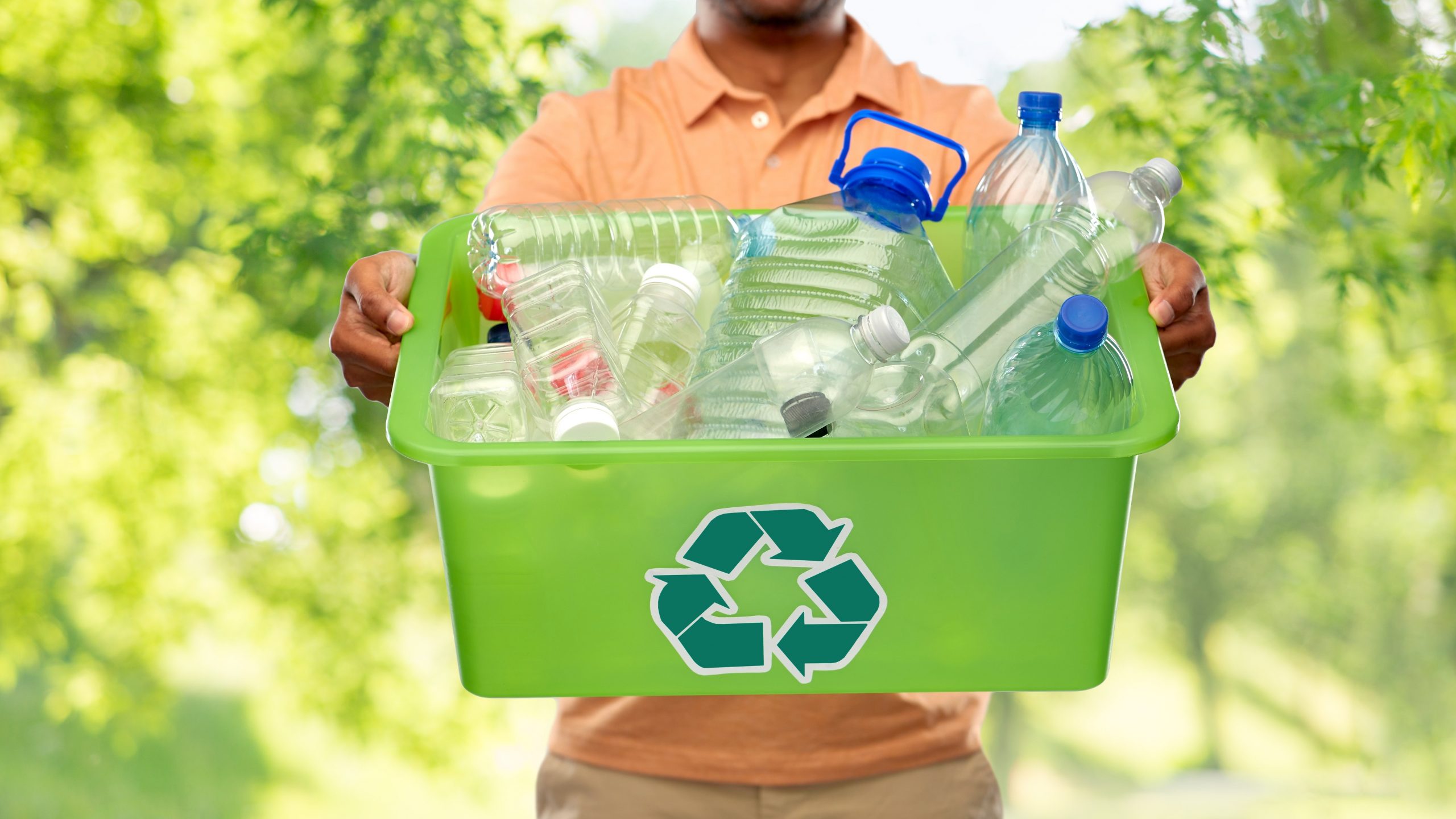
Researchers at the University of Edinburgh have shown that waste plastic can become the starting point for a medically important drug. In a new proof-of-concept study, the team used engineered Escherichia coli to convert material derived from polyethylene terephthalate, or PET, into levodopa, one of the best-known treatments for Parkinson’s disease.
The work sits at an unusual intersection of polymer recycling, synthetic biology and pharmaceutical manufacturing. PET is the polyester used in many drink bottles, food trays and packaging films. Levodopa, by contrast, is a high-value medicine used to manage the movement-related symptoms of Parkinson’s. Bringing those two worlds together is a striking example of what researchers now call upcycling: taking a waste stream and turning it into a product with greater value than the original material.
The scientists are careful not to overstate the result. This is not yet an industrial process and it will not solve global plastic pollution on its own. Even so, the study shows something important: plastic waste is not only a disposal problem, but also a potential carbon feedstock for making useful chemicals that would otherwise be produced mainly from fossil resources.
From common polyester to a pharmaceutical building block
PET is one of the world’s most familiar polymers. Chemically, it is a polyester made from terephthalic acid and ethylene glycol. Because it is strong, light, transparent and cheap, it has become a dominant packaging material. The drawback is equally well known. Large volumes of PET enter waste streams every year and not all of it is effectively collected, sorted and recycled.
Mechanical recycling can keep PET in use for another life cycle, but that route has limits. Material quality can fall over repeated cycles, contamination complicates processing and mixed waste streams reduce value. Chemical and biological recycling methods are therefore attracting growing attention, especially those that can break PET into its smaller molecular components and then rebuild those components into something new.
In this latest study, the key PET-derived feedstock was terephthalic acid, often shortened to TPA. Once PET is depolymerized, TPA can be recovered as one of the major monomers. Instead of simply turning that monomer back into more polymer, the Edinburgh team asked a broader question: can biology redirect that carbon into a completely different product class?
The answer, at least at laboratory scale, appears to be yes.
Why levodopa matters
Levodopa has long been considered a central medicine in Parkinson’s treatment. It is widely used to help manage tremor, stiffness and other motor symptoms linked to the disease. In clinical practice it remains a cornerstone therapy because it can restore dopamine-related function more effectively than many alternatives.
That clinical importance is part of what makes the study notable. Researchers did not choose a trivial demonstration molecule. They selected a real pharmaceutical with established medical value. By doing that, they showed that polymer waste can, in principle, feed into the manufacture of an essential medicine rather than only low-value fuel or bulk chemicals.
There is also a sustainability angle. Conventional routes to many pharmaceutical compounds depend on petrochemical feedstocks, energy-intensive synthesis, or precious catalysts. A biologically driven route from waste-derived aromatic monomers could, if scaled successfully, reduce reliance on virgin fossil carbon and make some parts of the supply chain more circular.
That does not mean the new route is automatically greener in every respect. Full environmental performance would still need life-cycle analysis, including polymer collection, depolymerization, fermentation, purification, energy use and yield. But the concept opens a credible path toward lower-carbon pharmaceutical manufacturing.
How the researchers made the conversion work
The process begins before the bacteria are involved. PET must first be broken down into its constituent molecules. For this study, the crucial intermediate was TPA, the aromatic monomer that gives PET much of its rigidity and performance.
The real innovation was in the metabolic engineering. The researchers designed a new biological pathway in E. coli that could take up TPA and convert it through enzyme-driven steps toward levodopa. Rather than forcing a single bacterial strain to do all the chemistry at once, the team used two engineered strains in sequence. One organism handled part of the pathway and a second completed the downstream transformation.
This split-pathway approach is often useful in synthetic biology. Long metabolic routes can place too much burden on one cell, lower productivity, or create incompatibilities between enzymes. Dividing the job between two strains can improve control and help each organism focus on the chemistry it performs best.
The challenge here was especially interesting because TPA is not a natural feedstock for making levodopa. Researchers had to redirect bacterial metabolism so that a plastic-derived aromatic compound could be turned into the right biochemical intermediate and then into the target drug molecule. In other words, they built a custom carbon pathway linking polymer waste to pharmaceutical synthesis.
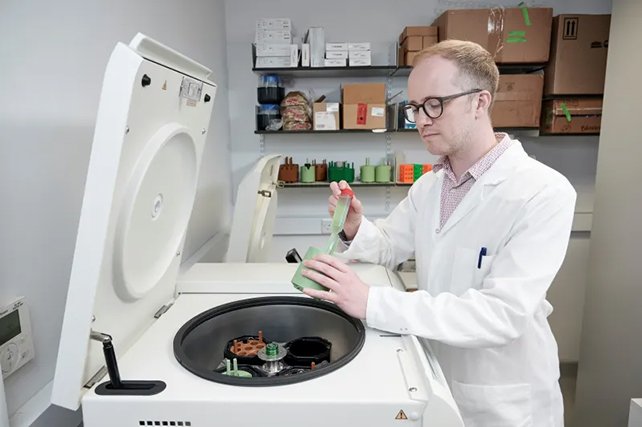
The result was a laboratory demonstration that engineered microbes can use a PET-derived input and produce levodopa. That is a major conceptual step, even if productivity, yield and economics still need a great deal of work before any industrial deployment could be considered.
What makes this important for polymer science
Polymer recycling discussions often focus on making the same polymer again. That remains important, especially for high-volume packaging materials such as PET. But another branch of the field is now developing quickly: using waste polymers as carbon reservoirs for new chemical products. This approach broadens the value proposition of recycling.
For PET, the chemistry makes this particularly appealing. Terephthalic acid is an aromatic molecule and aromatic compounds are valuable starting points in many branches of chemical manufacturing. If researchers can reliably funnel TPA into microbial or catalytic routes, PET waste could support the production of fine chemicals, monomers, materials additives and pharmaceutical intermediates.
That matters because economics often decide which recycling technologies survive beyond the lab. A route that produces only low-value outputs can struggle to compete with cheap virgin petrochemicals. A route that makes higher-value molecules may support better process economics, especially at early scale.
There is also a scientific lesson here. Waste plastics should not always be viewed only as end-of-life materials. In some cases they are structured carbon sources with useful chemistry already built in. PET is not just discarded packaging. It is a synthetic polymer containing aromatic building blocks that can be harvested and transformed.
That shift in mindset is helping to reshape the field. Scientists are asking not only how to collect and reprocess plastics, but how to extract the most molecular value from them.
A broader move toward biological upcycling
The Edinburgh result is part of a wider trend. Over the past several years, researchers have been developing enzymes that break down PET more efficiently, microbes that assimilate plastic-derived monomers and hybrid processes that combine depolymerization chemistry with fermentation. This is creating a new toolkit for turning plastic waste into specialty chemicals.
Importantly, the same research group had previously reported another pharmaceutical example: converting PET-derived material into paracetamol. Seen together, the paracetamol and levodopa studies suggest that the idea is not limited to one headline-grabbing molecule. It may be possible to build a platform in which waste plastic feeds a range of tailored biosynthetic pathways.
That platform view is significant. If a single waste stream can be channeled into multiple products depending on market demand, a future recycling biorefinery could become more flexible and resilient. One product might be a medicine precursor, another a performance chemical and another a polymer additive. The common theme would be that all start with recovered carbon from plastic waste.
Biological processes also offer selectivity advantages. Enzymes can carry out complex transformations under relatively mild conditions, often with less need for extreme temperatures or harsh reagents than traditional chemical synthesis. That does not guarantee simpler scale-up, but it does make biology attractive for making intricate molecules.
The limitations are real
As exciting as the study is, it should be understood in the right context. This is a proof of concept carried out at laboratory scale. Moving from a successful academic demonstration to a robust industrial process is a long journey.
Several technical questions remain open. Can the engineered bacteria tolerate the feedstocks and intermediates at high concentrations? Can yields and productivities be raised enough for manufacturing? How clean must the TPA feed be and what pre-treatment is needed for real mixed post-consumer PET waste? How costly will downstream purification of pharmaceutical-grade levodopa be?
There are also regulatory and supply-chain questions. Pharmaceutical production demands very high consistency, traceability and purity. Using waste-derived carbon does not prevent that, but it does require careful process design and validation. A future manufacturing route would need to show that the recycled origin of the carbon does not compromise quality or patient safety.
The researchers themselves note another important point: even if all global levodopa were made by such a route, it would consume only a tiny fraction of the plastic waste generated worldwide. So this should not be presented as a direct solution to the entire plastics crisis.
Instead, its value is strategic. It demonstrates a new kind of circular chemistry in which plastic waste can become part of high-value manufacturing. That can complement, rather than replace, better collection systems, improved packaging design, reduction of unnecessary plastic use and stronger conventional recycling infrastructure.
Why PET is such a strong candidate for this kind of work
PET has several features that make it especially attractive for advanced recycling research. It is used at enormous scale, its chemistry is well understood and it can be depolymerized into recognizable monomers. Compared with some mixed or heavily additive-loaded polymers, PET offers a relatively clear route from waste object back to molecular feedstock.
The terephthalic acid recovered from PET is especially valuable because aromatic molecules are harder to make sustainably than simple aliphatic chemicals. When PET is discarded, a potentially useful aromatic carbon source is being lost. Recovering that value is one reason PET remains central to discussions about chemical recycling and upcycling.
Still, feedstock quality matters. Clean bottle streams are very different from colored, multilayer, contaminated, or blended PET wastes. Real-world deployment of biobased upcycling will depend not only on clever metabolic engineering, but on sorting, cleaning and depolymerization technologies that can provide reliable inputs.
What this could mean for future manufacturing
If the concept can be scaled, it hints at a new industrial model. Waste management, polymer depolymerization, bioprocessing and pharmaceutical chemistry would become parts of one connected value chain. A used bottle could eventually be seen not as rubbish, but as a feedstock for specialty manufacturing.
That idea fits with a broader shift toward circular industry. In a circular system, materials are kept in use at their highest possible value for as long as possible. Sometimes that means reusing a product. Sometimes it means mechanically recycling a polymer. And sometimes, as in this study, it may mean converting the polymer into a very different and more valuable molecule.
The work also strengthens the case for integrating synthetic biology into polymer science. Engineered microbes are increasingly being used to make monomers, degrade polymers and valorize waste streams. As these tools improve, the border between materials science and biotechnology will continue to blur.
For industry, the long-term opportunity is not just one drug. It is the possibility of building flexible manufacturing systems that use waste-derived feedstocks for a portfolio of chemicals and medicines. Whether that happens will depend on yields, economics, policy and infrastructure. But the scientific direction is becoming clearer.
A small experiment with a big message
The headline result is simple: researchers have shown that carbon from PET plastic can be routed into levodopa using engineered bacteria. Behind that simple statement lies a larger message about how waste plastics may be reimagined.
Plastic pollution is still a major environmental problem. Better reduction, collection, design and recycling remain essential. Yet studies like this show that advanced recycling does not have to stop at making more plastic. It can also feed into medicine, fine chemicals and other high-value sectors.
For polymer science, that is a powerful idea. It suggests that at least some discarded plastics can serve as raw materials for a more circular chemical economy. For biotechnology, it shows how metabolic engineering can unlock unfamiliar feedstocks. And for sustainable manufacturing, it offers a glimpse of systems where human health and waste reduction are addressed together.
The Edinburgh team’s work is early-stage, but it is imaginative, technically sophisticated and highly relevant to the future of polymer upcycling. Turning a waste bottle into a Parkinson’s drug will not clean up the planet by itself. What it does do is prove that the molecular value trapped inside waste plastics is much greater than many people assume.