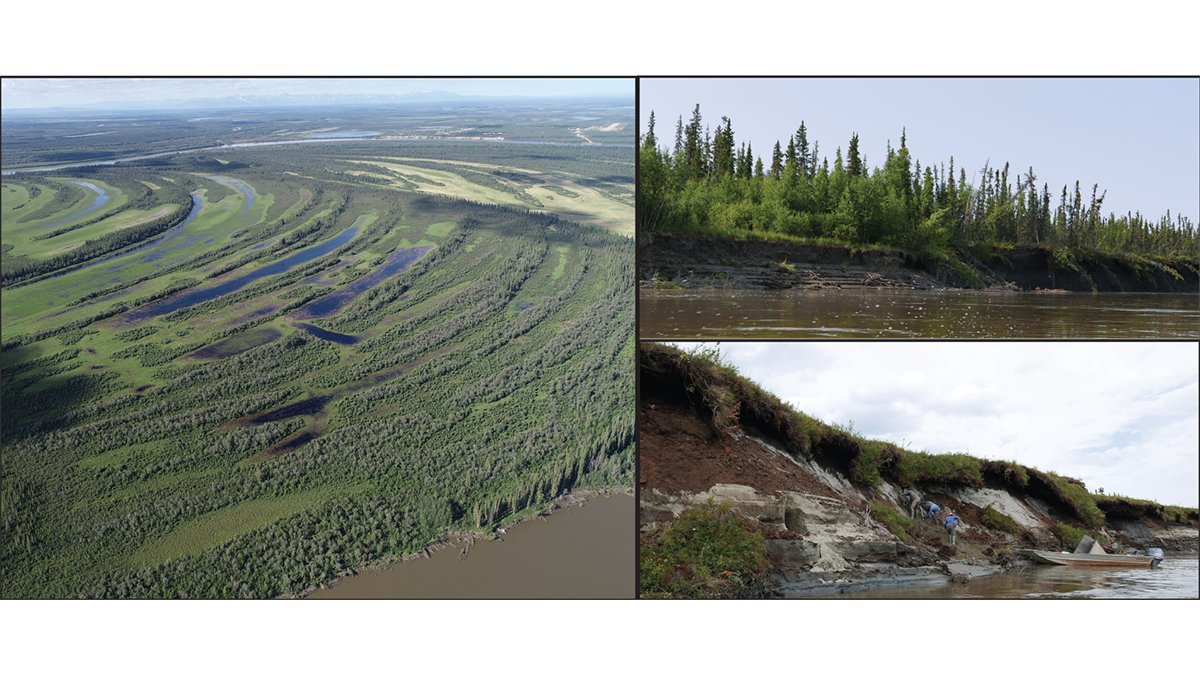
A new study in Global Biogeochemical Cycles suggests the Arctic is opening a much older carbon vault than scientists once thought. Led by Michael A. Rawlins at the University of Massachusetts Amherst, the research shows that warming across northern Alaska is not just changing when rivers flow, but also how much long-frozen organic carbon they carry toward the Beaufort Sea. The result is a clearer picture of a dangerous feedback: as permafrost thaws, more ancient carbon is mobilized, more of it can be converted into carbon dioxide and the warming that caused the thaw can intensify further.
That basic story has been building for years, but the new work adds something unusually valuable: detail. The team examined Alaska’s North Slope at a fine one-kilometer scale, across 44 years, from 1980 to 2023. In a region where field measurements are notoriously sparse, that kind of long, high-resolution reconstruction matters. It lets scientists see not only that change is happening, but where, when and in what form it is unfolding.
The findings point to a hydrological system that is becoming more active as the frozen ground softens. Freshwater runoff is increasing. Subsurface water movement is increasing. And the thaw season now reaches later into late summer and autumn than it used to. All of that creates new pathways for dissolved organic carbon, or DOC, to move from soils that have stayed frozen for thousands of years into streams, rivers, estuaries and eventually the Arctic Ocean.
Why Arctic rivers matter far beyond the Arctic
The Arctic can seem remote, but its rivers punch above their weight in the Earth system. They deliver an outsized share of global river water into a relatively small ocean basin. That means even modest changes on land can reshape salinity, nutrient balance, coastal ecosystems and carbon processing in Arctic waters.
These rivers are not simply channels carrying snowmelt to the sea. They are tightly connected to the condition of the ground itself. In permafrost regions, the top layer of soil thaws during the warm season and refreezes during winter. This layer, called the active layer, acts like a seasonal interface between the atmosphere, the landscape and the deeper frozen store of ancient plant material.
As the climate warms, that active layer is deepening. Water can then travel through more soil than before, picking up organic matter that has been locked away for centuries to millennia. Some of that matter remains in dissolved form and is swept into rivers. Once there, it becomes available to microbes and sunlight-driven chemical reactions, both of which can transform it into greenhouse gases.
This is what makes permafrost thaw more than a local geology story. It is also a carbon-cycle story, an ocean story and a climate story.
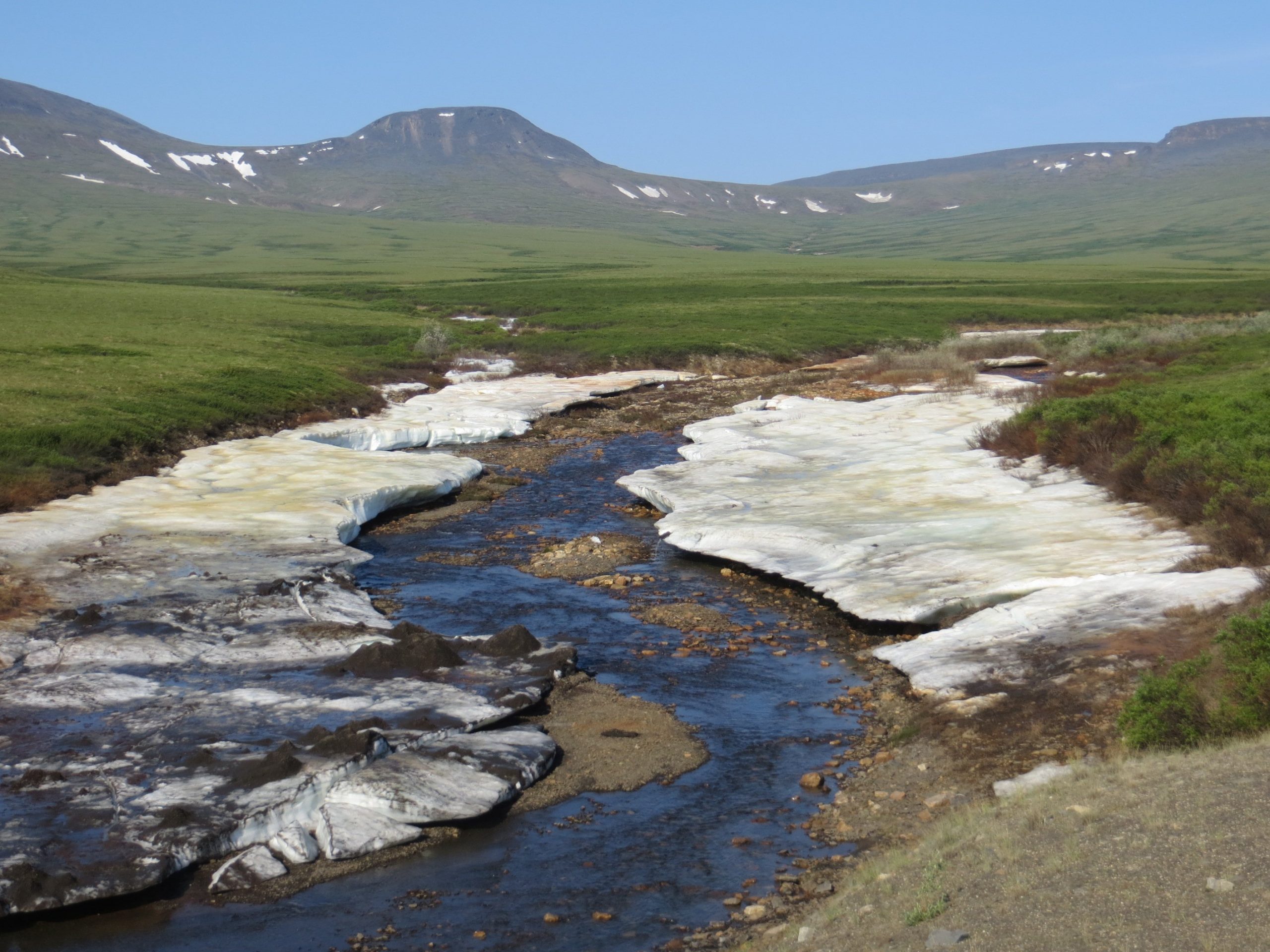
A detailed look at northern Alaska’s changing water cycle
The study focused on the North Slope of Alaska, a vast drainage region that funnels water into estuaries along the Beaufort Sea coast. It is a place of tundra, wetlands, polygonal ground, icy soils and short but increasingly dynamic thaw seasons. It is also hard to monitor directly. Rivers can be remote, seasonal access is limited and year-round sampling across such a large area is extremely difficult.
To work around that problem, the researchers used the Permafrost Water Balance Model, a system refined over about 25 years to simulate snow conditions, soil temperatures, hydrology, active-layer changes and river transport. An important later addition allowed the model to estimate dissolved organic carbon as well, bringing carbon movement into the hydrological picture rather than treating it as a separate issue.
Earlier studies often worked at coarser scales, with grid cells large enough to blur local contrasts between flatter western terrain, more mountainous eastern areas and the many small drainage features that define Arctic landscapes. The new kilometer-scale simulations capture much more of that heterogeneity. That is critical because permafrost thaw does not behave evenly. Small differences in slope, soil composition, ice content, vegetation and drainage can produce big differences in how much water and carbon get mobilized.
The result is one of the sharpest regional portraits yet of how land-to-ocean connections are changing in a warming Arctic.
Ancient carbon is starting to move
One of the most important findings is that carbon entering these waterways is not just fresh organic material from recent plant growth. A significant fraction comes from old stores in permafrost. In other words, the Arctic is not simply cycling modern carbon faster. It is adding older carbon that had effectively been removed from the active climate system for very long periods.
That distinction matters. When ancient organic matter thaws and enters river networks, it can be decomposed and released as carbon dioxide. From the atmosphere’s perspective, that is new fuel for warming, even if the carbon itself is old. Scientists have long worried about permafrost as a climate feedback for this reason: frozen landscapes contain vast reserves of organic material and once thaw exposes that material to water and microbes, the system can shift from storage to release.
The new study suggests those pathways are becoming more efficient on the North Slope. More thaw means more hydrological connectivity. More connectivity means more carbon can leave soils and enter streams. And because the thaw season is extending later into the year, this transfer now has a longer window in which to happen.
That late-season shift is especially important. In Arctic hydrology, the traditional focus has often been on spring snowmelt, when river discharge surges. But if autumn becomes increasingly active because the ground stays thawed longer, then scientists will need to rethink when the most important fluxes occur. Carbon export may no longer be concentrated in the familiar seasonal pattern it once followed.
The strongest signals are not everywhere
The model showed that changes were widespread, but not uniform. The largest increases in dissolved organic carbon export were concentrated in northwestern Alaska. That pattern appears to reflect the geography of the region.
Flatter terrain tends to accumulate more organic-rich material over long periods. In landscapes with poor drainage and persistent cold, plant matter can build up in soils rather than fully decompose. When those soils thaw, there is simply more carbon available to be mobilized. By contrast, eastern parts of the North Slope are more mountainous and tend to have rockier, sandier soils, conditions that usually support lower DOC release.
This kind of regional contrast is easy to miss in broad Arctic averages. But for coastal ecosystems, it can be decisive. Estuaries receiving stronger pulses of freshwater and organic carbon may experience larger swings in salinity, water chemistry and biological activity than neighboring areas only a short distance away.
That has consequences for everything from microbial communities to plankton to fish nurseries and bird feeding grounds. Arctic coasts are not empty receiving basins. They are biologically active zones where land-derived material helps shape food webs.
What happens after carbon reaches the coast?
Not all dissolved organic carbon is the same and not all of it follows the same fate. Some may be buried. Some may be transported farther offshore. Some may be consumed by microbes and respired back into the atmosphere as carbon dioxide. Some may be altered by sunlight in the water. But the broad concern is clear: the more ancient carbon enters rivers and coastal seas, the greater the opportunity for that old material to re-enter the modern climate system.
The Arctic Ocean is especially sensitive because it is small relative to the amount of river water and river-borne material it receives. Inputs that might be diluted more easily elsewhere can have larger effects there. Freshwater can change stratification, influencing how layers of water mix. Organic matter can alter light conditions and microbial activity. Nutrients can stimulate or reshape biological productivity. And if carbon is rapidly processed, coastal waters can become a site of greenhouse gas release rather than long-term storage.
That is why this study matters beyond hydrology. It helps define the upstream drivers of downstream climate and ecosystem change.
A longer thaw season changes the rules
Perhaps the most striking part of the new analysis is not just that the active layer is deepening, but that thaw conditions are now lingering into September and even October. In a place where the warm season is short, a few extra weeks are not trivial. They can substantially increase the time available for water to infiltrate soils, move laterally through the ground and connect carbon-rich zones to stream networks.
That means the system is changing in two ways at once. First, it is opening deeper access to previously frozen organic matter. Second, it is keeping the transport network active for longer. Those two shifts reinforce each other.
It also means historical assumptions based on older seasonal patterns may no longer hold. Monitoring campaigns designed around peak snowmelt might miss a growing share of the carbon flux if more of it is now happening later in the year. For Arctic science, that is a practical warning as much as a conceptual one: to understand future carbon budgets, researchers may need to watch the shoulder seasons much more closely.
Why models are doing so much of the work here
There is a reason computational modeling plays such a central role in this field. Northern Alaska is huge, remote and difficult to sample with the density needed for confident regional accounting. You can measure particular streams or estuaries directly, but turning that into a complete picture of the whole North Slope is another matter.
That does not mean models replace field data. It means they depend on them and extend them. Field observations provide the calibration points, the physical constraints and the tests of realism. Models then fill in the gaps across space and time, allowing scientists to ask what conditions likely looked like on days and in places where no one was there with a sampling bottle or river gauge.
In this case, the simulations were computationally intensive, taking days on a supercomputer. That kind of effort reflects the complexity of the problem. Snow accumulation, thaw depth, groundwater flow, river discharge, coastal export and carbon transport all interact. Capturing those interactions at kilometer resolution over more than four decades is exactly the sort of task advanced Earth-system modeling is built for.
Still, the study also underscores the need for more direct observations. Better river chemistry records, more seasonal sampling and improved estuary monitoring would all help refine future estimates.
Why this matters for climate forecasts
Permafrost carbon feedbacks remain one of the harder pieces of the climate puzzle to pin down. Global climate models can estimate warming under different emissions scenarios, but the response of frozen carbon reservoirs is still associated with major uncertainty. How fast will thaw spread? How much carbon will be mobilized? How much of that carbon will be released to the atmosphere and how much will remain in soils or sediments?
Studies like this reduce some of that uncertainty by focusing on actual pathways of transport. They remind us that carbon does not need to erupt dramatically from the ground to matter. It can leave quietly, dissolved in water, moving through creeks and rivers before being processed elsewhere. That can make the feedback harder to see, but not less important.
The work also highlights a broader shift underway across the Arctic: warming is not only changing temperature. It is reorganizing the plumbing of the landscape. When frozen ground becomes seasonally permeable over greater depth and for longer periods, whole drainage systems start behaving differently. That affects erosion, wetland hydrology, river chemistry, coastal habitats and greenhouse gas emissions all at once.
From that perspective, the North Slope is not just thawing. It is being rewired.
The next questions scientists will need to answer
The new analysis opens several lines of inquiry. One is what happens inside the estuaries once this carbon-rich freshwater arrives. Another is how small-scale features such as ice wedge polygons influence the speed and direction of water movement. These polygonal ground patterns are common across Arctic permafrost terrain and as they degrade, they can radically alter drainage routes.
Researchers will also want to know how representative northern Alaska is of other Arctic regions. Siberia, northern Canada and Greenland all have their own combinations of soil carbon, ice content, topography and hydrology. Some may show similar late-season intensification. Others may behave differently. Building a pan-Arctic understanding will require many more land-to-ocean studies like this one.
For now, the message is sobering but clear. Permafrost thaw is not only a land problem and it is not only a future problem. It is already changing how Arctic rivers work, already increasing the export of ancient organic carbon and already complicating the climate system in ways that are difficult to reverse.
The Arctic has often been described as an early warning system for global warming. This study adds another warning light to the dashboard. As frozen soils lose their grip on ancient carbon, the rivers of the far north are becoming conveyors of the past into the climate of the future.