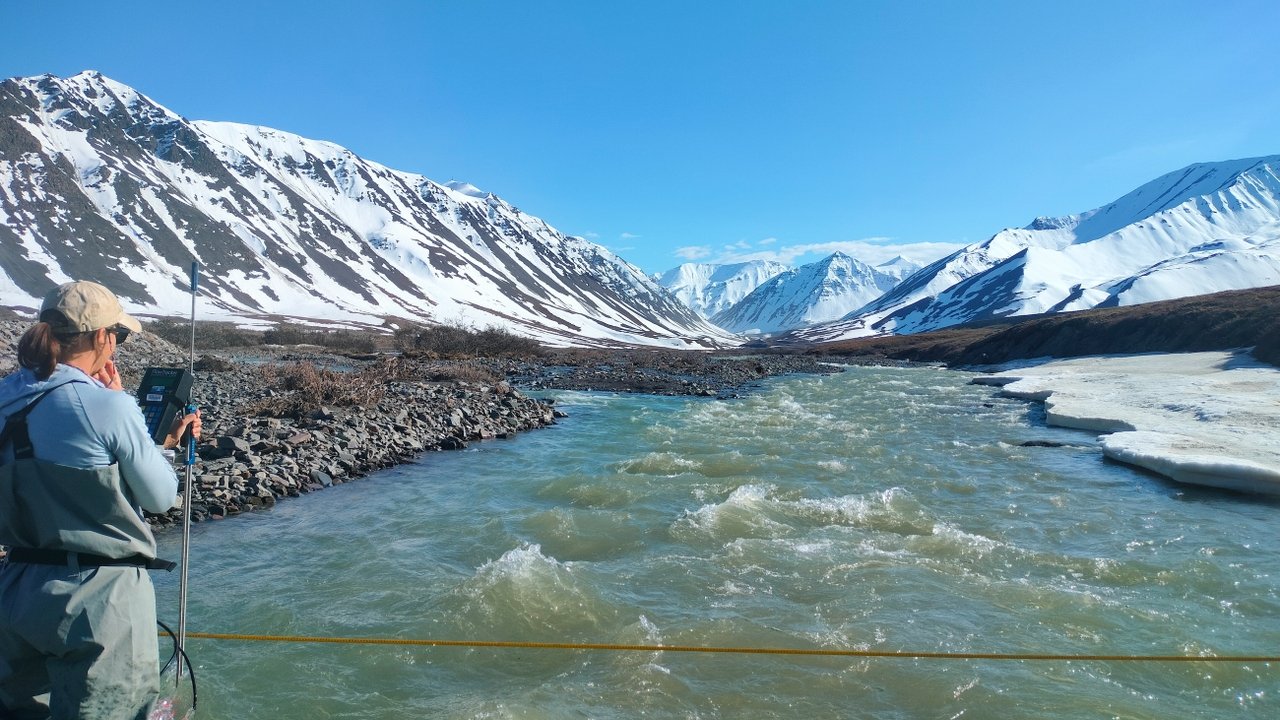
A warming Arctic is opening a new route for old carbon to re-enter the climate system. In a new study published in Global Biogeochemical Cycles, researchers led by the University of Massachusetts Amherst found that northern Alaska is sending more freshwater and more dissolved organic carbon into coastal waters as permafrost thaws, runoff rises and the seasonal thaw stretches later into the year.
That might sound like a local hydrology story, but it is much bigger than that. Permafrost stores vast amounts of ancient organic matter that has been frozen away for thousands of years. Once thawed, some of that material can move into rivers, estuaries and eventually the Arctic Ocean, where microbes and sunlight can help turn it into carbon dioxide. That means thawing ground is not just responding to climate change. It is also feeding it.
The new work focuses on Alaska’s North Slope, a huge Arctic region draining toward the Beaufort Sea. It is an area with hundreds of rivers and streams, but not nearly enough direct measurements to capture what is changing across the whole landscape. To fill that gap, the team used a high-resolution version of a long-running Arctic hydrology model, reconstructing daily river flow and coastal carbon export over 44 years, from 1980 through 2023.
The result is one of the clearest regional pictures yet of how permafrost thaw is altering the connection between land and sea in the far north. More water is moving through the system. More subsurface flow is reaching streams. And more old carbon is being mobilized as soils thaw deeper and for longer each year.
Why Arctic rivers matter more than their size suggests
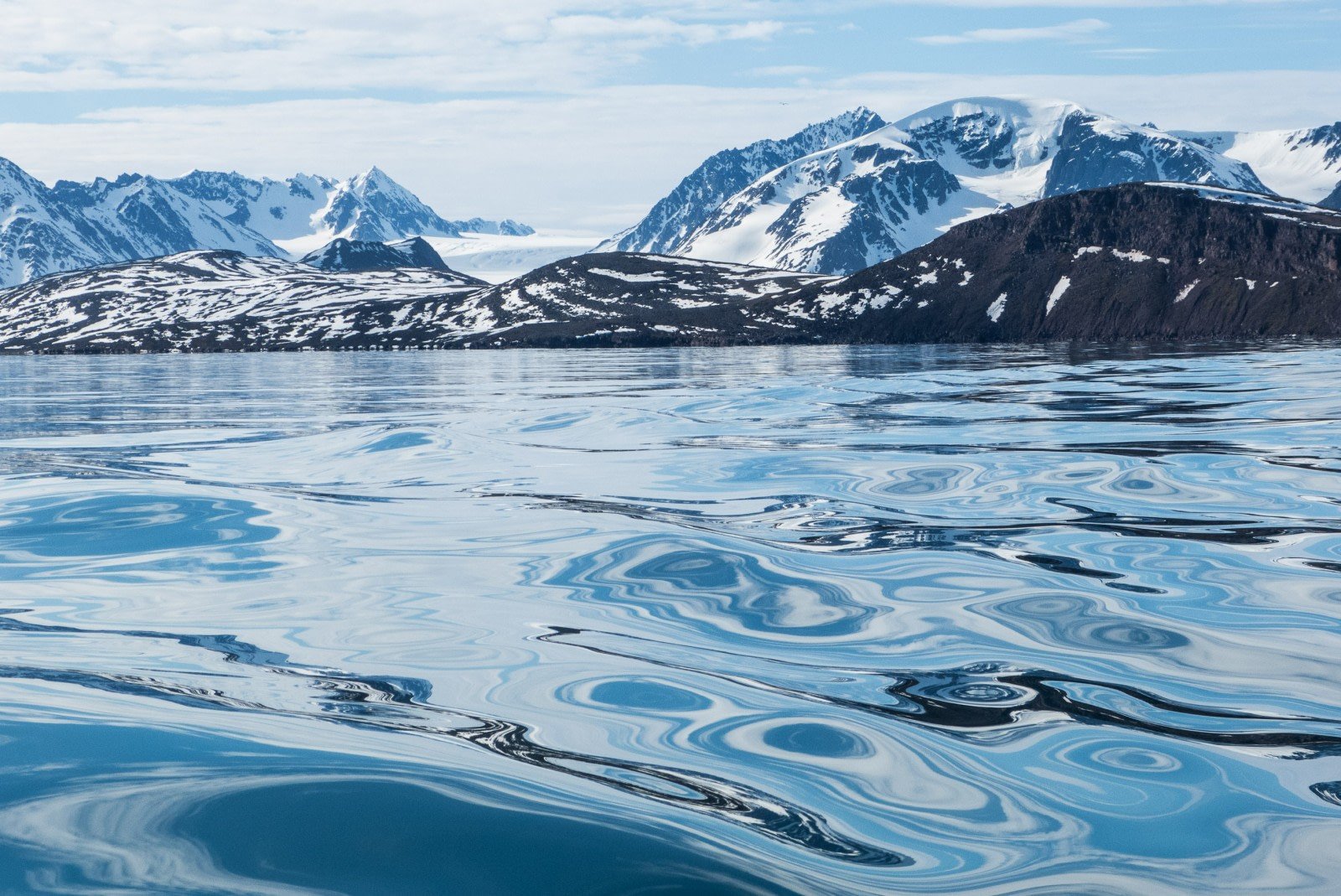
The Arctic often seems remote in climate discussions, but its rivers punch far above their weight. Collectively, Arctic rivers deliver about 11% of global river discharge into an ocean basin that contains only around 1% of the world’s ocean volume. In other words, relatively small changes on land can have an outsized effect on Arctic coastal waters.
Freshwater influences ocean salinity, stratification, sea ice formation, nutrient delivery and ecosystem structure. Add dissolved organic carbon, often shortened to DOC and the chemistry gets even more complex. This carbon-rich material can darken water, alter light penetration, feed microbial activity and become a source of atmospheric greenhouse gases as it breaks down.
That matters especially in the Beaufort Sea and nearby estuaries, which already sit at the edge of rapid environmental change. River chemistry, coastal productivity, fish habitat, lagoon conditions and sediment transport can all shift when freshwater and carbon inputs rise together.
So while the headline finding is about thawing permafrost, the study also speaks to a wider Arctic system under pressure: soils, streams, estuaries and the ocean are becoming more tightly linked as warming accelerates.
The hidden engine beneath the ground
A key part of the story lies in the Arctic’s “active layer,” the near-surface soil zone that thaws in summer and refreezes in winter. Beneath it sits perennially frozen ground: permafrost. As the climate warms, the active layer is getting deeper. That gives water more room to infiltrate the soil and move underground before emerging in streams and rivers.
This extra subsurface movement changes the character of runoff. Snowmelt has long dominated Arctic river discharge, especially during the spring freshet, when meltwater surges across the landscape. But thawing soils are becoming an increasingly important contributor later in the warm season. Groundwater pathways that were once blocked or limited by frozen soil are opening up.
That is where the carbon problem grows sharper. Deeper thaw does not just mean more water. It also means access to older, carbon-rich material that has been locked away for long periods. As that soil organic matter is mobilized, rivers can carry it toward the coast in dissolved form.
The Arctic Ocean already receives a disproportionately high share of river-borne dissolved organic carbon compared with many other ocean basins. Earlier research has suggested that more than 275 million tons of this organic material are converted each year into carbon dioxide. Any increase in delivery from thawing landscapes could strengthen that climate feedback.
A sharper look at a difficult landscape
One reason this question has been so hard to answer is simple: northern Alaska is vast, cold and difficult to monitor. There are rivers with little or no long-term sampling. Some places are remote even by Arctic standards. That leaves researchers with snapshots instead of a full moving picture.
Michael Rawlins, an extension associate professor of Earth, Geographic and Climate Sciences at UMass Amherst and colleagues tackled that problem using the Permafrost Water Balance Model, a system developed over roughly 25 years to simulate snow, soil freezing and thawing, runoff, groundwater movement and related Arctic processes.
The model was later expanded to include dissolved organic carbon, allowing researchers to estimate not just how much water flows through Arctic catchments, but also how much carbon may be traveling with it. For this study, the team pushed the analysis to a finer scale than before.
Previous runs typically used 25-kilometer grid cells. Here, the researchers resolved the region at 1-kilometer scale across an area about the size of Wisconsin. That kind of spatial detail matters because Arctic terrain is patchy. Wet lowlands, polygonal ground, sandy uplands, peat-rich areas and mountainous catchments do not all respond to warming in the same way.
The work also covered more than four decades of daily conditions. That long record helps distinguish real climate-driven shifts from one-off unusual years. It lets the team see trends in seasonal timing, total runoff and carbon export that short-term studies can easily miss.
Running simulations at that level took serious computing power. According to Rawlins, each model run required about 10 continuous days on a supercomputer at the Massachusetts Green High Performance Computing Center. That investment paid off with a much more resolved view of what is happening between thawing land and Arctic estuaries.
What the study found
The broad message is straightforward: northern Alaska is becoming wetter in terms of runoff, more hydrologically connected below ground and more capable of delivering organic carbon to the coast.
The model shows significant increases in freshwater export across the North Slope over the 1980 to 2023 period. At the same time, dissolved organic carbon export also rose, indicating that thawing soils are not merely releasing water but also mobilizing previously frozen organic matter.
Just as important is when this export is happening. The thaw season now extends later into late summer and autumn, in some places reaching September and October more often than it used to. That means the window for water and carbon movement is lengthening.
For Arctic systems, seasonal timing can be as important as annual totals. A later thaw season can alter lagoon salinity, estuary residence time, microbial processing and nutrient availability at a moment when biological communities may already be shifting with sea ice loss and warming waters.
The team found that the strongest increases in dissolved organic carbon export are occurring in northwestern parts of the study region. That pattern reflects geography. Flatter terrain tends to host more accumulated organic matter in permafrost-rich soils, while mountainous eastern areas are rockier and sandier and hold less easily mobilized carbon.
In other words, not all thawing ground carries the same climate risk. Where the land is flat and rich in ancient organic deposits, the river response can be especially carbon-heavy.
Why “ancient carbon” is such a concern
There is a meaningful difference between carbon cycling quickly through living plants and soil and carbon that has been frozen for millennia suddenly entering modern waterways. The latter effectively adds older stored carbon back into the active climate system.
Once dissolved organic carbon reaches rivers and coastal waters, several things can happen. Some of it may be transported farther offshore. Some may settle into sediments after transformation. Some may be consumed by microbes. Some may be broken down by sunlight. In all of those cases, part of the carbon can ultimately reappear as carbon dioxide.
That is why permafrost thaw is often described as a climate feedback. Rising temperatures thaw the ground. Thawed ground releases more greenhouse-gas-producing carbon, either directly from soils or indirectly after river transport. Those gases then contribute to further warming, which promotes more thaw.
The new study does not suggest every molecule of carbon exported to the coast becomes atmospheric CO2 immediately. But it does show that the pipeline moving old carbon from frozen land into active aquatic systems is intensifying.
And because this work resolves the landscape in much finer detail than many previous analyses, it strengthens confidence that these are not just broad-brush assumptions. They are patterns emerging from a physically detailed reconstruction of how the region has changed over time.
The coastal ecosystems downstream
The findings are also practical for people studying Arctic coastal ecosystems, not just global carbon budgets. Estuaries and lagoons along northern Alaska sit downstream of everything happening on land. If freshwater loads rise, salinity patterns can shift. If DOC rises, water color and light availability can change. If both happen at once, food webs may respond in complicated ways.
That is one reason the study is useful for projects such as the Beaufort Lagoon Ecosystems effort, which is working to understand what coastal environments are receiving from upstream watersheds. Better estimates of discharge and carbon loading can improve ecological forecasting in a region where baseline data remain sparse.
There is also a growing need to understand how fine-scale landscape features influence transport. The Arctic contains widespread “ice wedge polygons,” geometric ground patterns formed by repeated freezing and thawing. These structures affect how water ponds, drains and moves laterally across tundra. As they degrade, they can reorganize drainage networks and potentially alter how quickly carbon reaches channels.
In that sense, the new work is both a major result and a platform for more detailed process studies. It shows the trend clearly, but it also points to the next questions: which pathways matter most, which landscapes are most vulnerable and how much exported carbon is converted to greenhouse gases before or after reaching the sea?
A missing piece in climate accounting
One of the strongest messages from the research is that land-to-ocean connections in the Arctic are still undermeasured. Scientists have spent years studying permafrost emissions from soils, but river export of carbon remains a more poorly constrained part of the system.
That is a problem because river transport does not merely shift carbon from one place to another. It changes where and how carbon is processed. Carbon that was once frozen and stable on land can become chemically transformed, biologically consumed, or vented back to the atmosphere after entering aquatic networks.
For climate models, that means hydrology is not just a supporting detail. It can control the pace and form of permafrost carbon release. For ecosystem scientists, it means the Arctic coast cannot be understood without paying close attention to what is happening far inland. And for policymakers, it is another sign that Arctic warming is not isolated. It is connected to the global climate system through water, carbon and atmospheric feedbacks.
The study was supported by the U.S. National Science Foundation and NASA, underscoring how closely linked basic Earth-system research has become to understanding future risk. The Arctic is warming faster than the global average and every year of delay in measuring and modeling these processes leaves a larger blind spot in climate forecasting.
What emerges from this new analysis is not a sudden surprise so much as a sharper warning. The frozen north is becoming more fluid. Water is moving later in the year. Carbon that has been stored since long before modern industry is being flushed toward the ocean. And some of it is likely rejoining the atmosphere.
That makes Arctic rivers more than just scenic channels through tundra. They are becoming active conveyor belts in a warming world, carrying the past into the climate future.